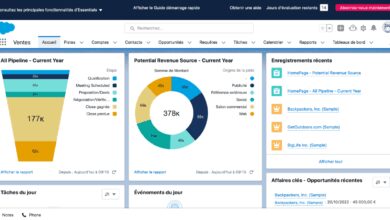
Unlock the full potential of your CRM with this ultimate CRM Salesforce based workflow customization guide. Learn how to streamline processes, boost efficiency, and empower your team with powerful automation strategies—all tailored to your unique business needs.
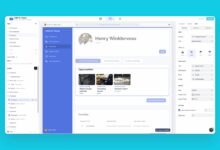



Understanding CRM Salesforce Based Workflow Customization

At the heart of every successful Salesforce implementation lies a well-structured workflow. Customizing workflows in Salesforce isn’t just about automation—it’s about aligning your CRM with your business processes to drive productivity, reduce manual errors, and enhance customer experience. This CRM Salesforce based workflow customization guide dives deep into how you can tailor Salesforce to your organization’s unique rhythm.
What Is Workflow Customization in Salesforce?
Salesforce workflow customization refers to the process of modifying standard CRM functionalities to meet specific business requirements. This includes automating tasks, setting up approval processes, triggering alerts, and managing data flows based on user actions or time-based conditions.
- Automated email alerts to customers or team members
- Field updates that change record values automatically
- Task creation based on lead status changes
- Time-dependent actions like follow-up reminders
According to Salesforce’s official documentation, Salesforce Help defines workflows as “rules that automate actions based on criteria you define.” These rules are foundational to building scalable, responsive CRM systems.
Why Customize Workflows in Salesforce?
Out-of-the-box Salesforce is powerful, but every business operates differently. Custom workflows ensure that your CRM supports—not hinders—your sales, service, and marketing operations.
- Reduce manual data entry and human error
- Improve response times to customer inquiries
- Ensure compliance with internal policies and SLAs
- Scale processes as your team grows
“Customization is not complexity—it’s clarity. When your CRM reflects your actual business flow, everyone wins.” — Salesforce Certified Administrator
CRM Salesforce Based Workflow Customization Guide: Core Components
To master the CRM Salesforce based workflow customization guide, you must first understand the building blocks of Salesforce automation. These components work together to create intelligent, responsive workflows that adapt to real-world scenarios.
Workflow Rules
Workflow rules are the foundation of Salesforce automation. They evaluate records against specific criteria and trigger actions when those criteria are met. For example, when a lead is created from a specific web form, a workflow rule can assign it to the right sales rep and send a welcome email.
- Criteria-based evaluation (e.g., Status = ‘Closed Won’)
- Immediate actions (e.g., email alert, field update)
- Time-dependent actions (e.g., remind manager after 2 days)
You can configure workflow rules in Setup → Process Automation → Workflow Rules. Salesforce allows up to 500 active workflow rules per organization, so strategic planning is essential.
Process Builder
Introduced as a more visual and powerful alternative to workflow rules, Process Builder allows you to automate complex business processes with a drag-and-drop interface. It supports multiple criteria nodes, immediate and scheduled actions, and even invocable Apex methods.
- Create multi-step processes across objects
- Launch flows or call Apex code
- Supports decision logic with multiple outcomes
For example, when an opportunity reaches ‘Closed Won’, Process Builder can update the account status, create a service case, notify the customer success team, and log a contract in an external system via API. Learn more at Salesforce Trailhead, where interactive modules teach Process Builder step-by-step.
Flow Builder
Flow is the most advanced automation tool in Salesforce, offering unparalleled flexibility. With Flow Builder, you can design both screen-based and automated flows that interact with users or run in the background.
- Screen flows for guided user experiences
- Autolaunched flows for backend automation
- Supports loops, variables, and complex logic
- Can integrate with external services via HTTP calls
Flows are replacing many legacy tools like workflow rules and approval processes. Salesforce recommends using Flow for new automation projects. A well-designed flow can replace dozens of workflow rules, reducing technical debt and improving maintainability.
CRM Salesforce based workflow customization guide – CRM Salesforce based workflow customization guide menjadi aspek penting yang dibahas di sini.
CRM Salesforce Based Workflow Customization Guide: Step-by-Step Implementation
Now that you understand the tools, let’s walk through a practical implementation using this CRM Salesforce based workflow customization guide. We’ll build a lead qualification workflow that automates follow-up tasks, assigns leads, and notifies managers.
Step 1: Define Business Requirements
Before touching the Salesforce interface, document what you want to achieve. Ask stakeholders:
- What triggers the workflow? (e.g., lead source, industry, score)
- Who should be notified? (e.g., sales rep, manager)
- What actions should occur? (e.g., assign owner, create task)
- Are there time-based follow-ups? (e.g., call within 24 hours)
Example: A B2B SaaS company wants all leads with a score > 70 to be assigned to a senior rep, receive a follow-up task, and trigger a Slack notification via integration.
Step 2: Map the Workflow Logic
Visualize the flow using a diagram. Tools like Lucidchart or Miro can help. Your map should include:
- Trigger event (e.g., Lead Created or Updated)
- Decision points (e.g., Is Lead Score > 70?)
- Action paths (e.g., Assign to Senior Rep, Create Task)
- Integration points (e.g., Send to Slack via Flow Action)
This step prevents logic errors and ensures all edge cases are considered before development begins.
Step 3: Build the Workflow in Salesforce
Navigate to Setup → Process Automation → Flow. Choose “Record-Triggered Flow” and set the object to Lead. Configure the trigger to run when a record is created or updated.
- Set entry criteria: [Lead].Lead_Score__c > 70
- Add an assignment element to update Owner ID to a senior rep queue
- Create a new Task with subject ‘Follow Up Call’ and due date = TODAY + 1
- Use an Apex action or third-party integration (e.g., Zapier) to send a Slack message
Test the flow in a sandbox environment before activating it in production.
CRM Salesforce Based Workflow Customization Guide: Advanced Automation Techniques
Once you’ve mastered the basics, it’s time to level up. This section of the CRM Salesforce based workflow customization guide explores advanced strategies that maximize efficiency and scalability.
Using Scheduled Flows for Recurring Tasks
Scheduled flows run at specific times or intervals, making them ideal for daily reports, renewal reminders, or inactive record cleanup.
- Run every day at 8 AM to check for overdue tasks
- Send weekly summaries to managers
- Automatically archive cases older than 1 year
Unlike time-dependent workflow rules, scheduled flows can process multiple records in bulk and include complex filtering logic.
Invoking Apex from Flows
When declarative tools aren’t enough, you can call Apex methods from flows. This is useful for:
- Complex calculations (e.g., dynamic pricing)
- Calling external APIs not supported by native actions
- Updating related records across multiple objects
To do this, create an @InvocableMethod in Apex and expose it to Flow. Ensure proper error handling and governor limit awareness.
CRM Salesforce based workflow customization guide – CRM Salesforce based workflow customization guide menjadi aspek penting yang dibahas di sini.
Using Dynamic Forms and Paths with Workflows
Combine workflow automation with dynamic user experiences. For example:
- Use Path to guide users through a sales process
- Use Dynamic Forms to show/hide fields based on record data
- Trigger a flow when a user completes a path stage
This creates a seamless experience where automation and UI work together to drive user adoption.
CRM Salesforce Based Workflow Customization Guide: Best Practices
Even the most powerful automation can backfire if not implemented wisely. Follow these best practices from this CRM Salesforce based workflow customization guide to ensure long-term success.
Start Small and Iterate
Don’t try to automate everything at once. Begin with high-impact, low-complexity workflows like lead assignment or case escalation. Test, gather feedback, and refine before scaling.
- Pilot new flows with a small team
- Monitor performance and error logs
- Document changes and version control
Avoid Overlapping Automation
Multiple automation tools (workflow rules, process builder, flows) can conflict. For example, two flows updating the same field may cause infinite loops or data inconsistencies.
- Use a single source of truth for each automation
- Disable legacy workflow rules when migrating to Flow
- Use debug logs to trace execution order
“The most dangerous automation is the one you don’t know exists.” — Salesforce Architect
Monitor and Optimize Performance
Salesforce has governor limits (e.g., 200 SOQL queries per transaction). Poorly designed workflows can hit these limits, causing failures.
- Use bulk-safe logic (avoid loops inside record iterations)
- Limit the number of active flows per object
- Review the Automation Usage page in Setup regularly
Use the Salesforce Developer Docs to understand best practices for scalable automation.
CRM Salesforce Based Workflow Customization Guide: Integration with External Systems
Modern businesses don’t operate in isolation. This CRM Salesforce based workflow customization guide wouldn’t be complete without covering how to connect Salesforce to external tools like email platforms, ERP systems, or communication apps.
Using Outbound Messages and Callouts
Salesforce can send data to external systems via:
- Outbound Messages (SOAP-based, requires endpoint)
- HTTP Callouts from Apex or Flow
- Platform Events for event-driven architecture
Example: When a deal closes, send customer data to your billing system via REST API using an autolaunched flow.
Integrating with Zapier or MuleSoft
For non-technical teams, tools like Zapier offer a no-code way to connect Salesforce to 5,000+ apps.
- Create a Trello card when a high-priority case is created
- Post to Slack when a lead is assigned
- Sync contacts with Mailchimp for email campaigns
MuleSoft, Salesforce’s integration platform, provides enterprise-grade connectivity with robust security and monitoring.
CRM Salesforce based workflow customization guide – CRM Salesforce based workflow customization guide menjadi aspek penting yang dibahas di sini.
Using Einstein Automation
Salesforce Einstein brings AI-powered automation to workflows. Examples include:
- Einstein Next Best Action: Suggest the best follow-up step
- Einstein Case Routing: Automatically assign cases based on content
- Einstein Prediction Builder: Forecast outcomes like churn risk
These features enhance workflows with intelligent decision-making, reducing manual effort and improving accuracy.
CRM Salesforce Based Workflow Customization Guide: Troubleshooting Common Issues
Even the best-designed workflows can fail. This section of the CRM Salesforce based workflow customization guide helps you diagnose and fix common problems.
Workflow Not Triggering
If a workflow isn’t running, check:
- Is the workflow rule active?
- Does the record meet the entry criteria?
- Is the field used in criteria marked as “not triggerable”?
- Are there validation rules blocking the save?
Use the Developer Console or Flow Debugger to trace execution.
Time-Dependent Actions Not Firing
Salesforce delays time-based actions until the scheduled time, but they can be canceled if the record is edited.
- Ensure the record doesn’t change in a way that removes it from criteria
- Check the Time-Based Workflow queue in Setup
- Consider using Scheduled Flows instead—they’re more reliable
Flows Causing Governor Limit Errors
If flows fail due to limits:
- Avoid querying large datasets in loops
- Use collections and bulk operations
- Break complex flows into smaller, reusable ones
Monitor limits using the Debug Log and optimize accordingly.
CRM Salesforce Based Workflow Customization Guide: Future Trends and Innovations
The world of Salesforce automation is evolving fast. This final section of the CRM Salesforce based workflow customization guide explores what’s coming next.
Low-Code and No-Code Dominance
Salesforce is doubling down on low-code tools. Flow is now the default automation tool, and features like Screen Flows and Digital Experiences empower non-developers to build complex apps.
- More drag-and-drop components
- Better error handling and debugging
- Enhanced version control and deployment tools
AI-Driven Workflow Suggestions
Future versions may include AI that analyzes your business processes and suggests optimal workflows. Imagine Salesforce recommending a lead scoring model based on historical conversion data.
- Predictive automation triggers
- Auto-generated flow templates
- Real-time optimization suggestions
Hyperautomation with External AI
Combining Salesforce with external AI models (e.g., GPT for email drafting, computer vision for document processing) will enable hyperautomation—where entire processes are handled with minimal human input.
CRM Salesforce based workflow customization guide – CRM Salesforce based workflow customization guide menjadi aspek penting yang dibahas di sini.
- Auto-generate case summaries from customer emails
- Extract contract terms using AI and populate Salesforce fields
- Auto-schedule meetings based on email intent
Stay ahead by experimenting with Einstein and third-party AI integrations today.
What is the best tool for workflow automation in Salesforce?
As of 2024, Flow is the recommended tool for all new automation projects. It’s more powerful, flexible, and future-proof than legacy tools like Workflow Rules and Process Builder. Salesforce is actively deprecating older tools in favor of Flow.
Can I automate workflows without coding in Salesforce?
Yes! Salesforce offers robust no-code tools like Flow Builder, Process Builder, and Workflow Rules that allow administrators and business users to create complex automations without writing a single line of code.
How do I debug a failed workflow or flow?
Use the Flow Debugger in Setup to test flows step-by-step. For active flows, check the Flow Interview logs. For older workflows, review the Debug Logs in the Developer Console and ensure you have the right debug levels enabled.
Are there limits to how many workflows I can create?
Yes. Salesforce imposes limits on active workflow rules (500 per org), flow interviews, and API calls. Always monitor your usage in Setup → Company Information and design with scalability in mind.
How do I migrate from Workflow Rules to Flow?
Salesforce provides a migration tool in Setup that converts existing workflow rules to equivalent flows. However, manual review is recommended to ensure logic accuracy and optimize performance.
Mastering the CRM Salesforce based workflow customization guide is a journey, not a destination. From basic field updates to AI-driven hyperautomation, Salesforce offers a spectrum of tools to match your business maturity. By following best practices, avoiding common pitfalls, and staying ahead of trends, you can transform your CRM into a strategic asset that drives growth, efficiency, and customer satisfaction. Start small, think big, and automate smart.
CRM Salesforce based workflow customization guide – CRM Salesforce based workflow customization guide menjadi aspek penting yang dibahas di sini.
Further Reading: