CRM Salesforce based analytics and reporting features: CRM Salesforce Based Analytics: 7 Powerful Features You Need

Want to turn your customer data into real business growth? Discover how CRM Salesforce based analytics and reporting features can transform your sales, service, and marketing strategies with powerful, real-time insights.


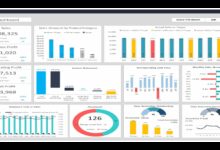
Understanding CRM Salesforce Based Analytics and Reporting Features

Salesforce is more than just a customer relationship management (CRM) platform—it’s a data powerhouse. At its core, CRM Salesforce based analytics and reporting features empower organizations to collect, analyze, and visualize customer interactions across every touchpoint. These tools are designed to help businesses make smarter decisions by turning raw data into actionable intelligence.
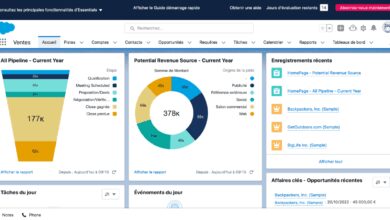
Unlike traditional reporting systems that rely on static spreadsheets and delayed updates, Salesforce delivers dynamic, real-time dashboards and customizable reports. Whether you’re tracking sales performance, monitoring customer service efficiency, or measuring marketing campaign ROI, Salesforce’s analytics engine provides a unified view of your business operations.
What sets CRM Salesforce based analytics and reporting features apart is their deep integration with the entire Salesforce ecosystem. From Sales Cloud to Service Cloud, and from Marketing Cloud to Commerce Cloud, every module feeds data into a centralized analytics layer. This ensures consistency, accuracy, and scalability across departments and geographies.
What Is Salesforce Analytics?
Salesforce Analytics, formerly known as Wave Analytics, is a cloud-based platform embedded within the Salesforce ecosystem that enables advanced data analysis and visualization. It allows users to create interactive dashboards, perform predictive analytics, and generate real-time reports without needing extensive technical knowledge.
The platform leverages Einstein Analytics, Salesforce’s AI-powered engine, to uncover trends, forecast outcomes, and recommend actions based on historical and real-time data. This means users aren’t just viewing data—they’re getting intelligent insights that drive proactive decision-making.
One of the key strengths of Salesforce Analytics is its ability to ingest data not only from Salesforce objects but also from external sources such as ERP systems, marketing automation platforms, and third-party databases. This creates a 360-degree customer view that’s essential for modern customer-centric strategies.
Core Components of Salesforce Reporting
Salesforce reporting is built around four primary components: reports, report types, dashboards, and folders. Each plays a critical role in organizing and delivering insights.
CRM Salesforce based analytics and reporting features – CRM Salesforce based analytics and reporting features menjadi aspek penting yang dibahas di sini.
- Reports: Structured data outputs that can be filtered, grouped, and summarized. They support various formats like tabular, summary, matrix, and joined reports.
- Report Types: Define the data model for reports, specifying which objects and fields are available. Custom report types can be created to meet specific business needs.
- Dashboards: Visual representations of key metrics using charts, gauges, and tables. Dashboards can be refreshed automatically and shared across teams.
- Folders: Used to organize reports and dashboards with role-based access control, ensuring data security and compliance.
These components work together seamlessly to provide a flexible and secure reporting environment. Users can drill down from dashboard widgets into underlying reports for deeper analysis, enabling a hierarchical exploration of data.
“Salesforce Analytics transforms data into decisions. It’s not just about what happened—it’s about what should happen next.” — Salesforce Official Documentation
Key Benefits of CRM Salesforce Based Analytics and Reporting Features
The true value of CRM Salesforce based analytics and reporting features lies in their ability to drive measurable business outcomes. From improving sales productivity to enhancing customer satisfaction, these tools deliver tangible benefits across the organization.
One of the most significant advantages is increased visibility. With real-time dashboards and automated reports, managers no longer have to wait for weekly or monthly summaries. They can monitor KPIs in real time, identify bottlenecks, and respond quickly to changing conditions.
Moreover, the democratization of data is a game-changer. Salesforce’s intuitive interface allows non-technical users to create and customize reports without relying on IT or data analysts. This self-service capability accelerates decision-making and fosters a data-driven culture.
Improved Decision-Making with Real-Time Insights
Real-time data access is a cornerstone of CRM Salesforce based analytics and reporting features. Unlike legacy systems that update data overnight or weekly, Salesforce provides live updates as records are created or modified.
This immediacy allows sales managers to track pipeline health, forecast accuracy, and deal progression in real time. For example, if a high-value opportunity is at risk of stalling, an alert can be triggered, prompting immediate intervention.
Marketing teams benefit equally. Campaign performance metrics—such as open rates, click-through rates, and conversion rates—are updated in real time, enabling rapid optimization of email sequences, ad spend, and lead nurturing workflows.
A study by Nucleus Research found that companies using Salesforce analytics achieve a 15% faster decision-making cycle compared to those relying on traditional BI tools. This speed translates into competitive advantage, especially in fast-moving industries.
CRM Salesforce based analytics and reporting features – CRM Salesforce based analytics and reporting features menjadi aspek penting yang dibahas di sini.
Enhanced Sales Performance and Forecasting Accuracy
Sales forecasting is one of the most critical—and challenging—functions in any organization. CRM Salesforce based analytics and reporting features significantly improve forecasting accuracy through historical trend analysis, pipeline inspection, and AI-driven predictions.
Salesforce’s forecasting module allows managers to view revenue projections by period, product, region, or sales rep. It supports multiple forecasting methods, including quota-based, opportunity-based, and volume-based forecasting.
Einstein Forecasting, powered by machine learning, analyzes past deal closures, stage durations, and rep performance to predict future outcomes. It can flag deals that are likely to close late or fall through, enabling proactive coaching and pipeline adjustments.
According to Salesforce, organizations using Einstein Forecasting report a 30% improvement in forecast accuracy. This level of precision helps CFOs plan budgets more effectively and executives set realistic growth targets.
Advanced Analytics Capabilities in Salesforce
Beyond basic reporting, CRM Salesforce based analytics and reporting features offer advanced capabilities that push the boundaries of traditional CRM analytics. These include predictive analytics, AI-driven insights, and external data integration.
These advanced tools are designed to help businesses anticipate customer behavior, optimize operations, and uncover hidden opportunities. They represent the evolution of CRM from a record-keeping system to a strategic intelligence platform.
With the integration of Einstein Analytics and Tableau, Salesforce has positioned itself as a leader in enterprise analytics. These tools enable complex data modeling, natural language queries, and sophisticated visualizations that were once the domain of specialized data science teams.
Predictive Analytics and AI-Driven Insights
Predictive analytics is one of the most transformative aspects of CRM Salesforce based analytics and reporting features. By leveraging machine learning algorithms, Salesforce can predict customer churn, identify high-value leads, and recommend next-best actions.
CRM Salesforce based analytics and reporting features – CRM Salesforce based analytics and reporting features menjadi aspek penting yang dibahas di sini.
Einstein Discovery, a component of Einstein Analytics, allows users to build predictive models using a drag-and-drop interface. For example, a marketing manager can create a model to predict which leads are most likely to convert based on historical engagement data, demographic information, and behavioral patterns.
These models generate scoring fields that can be used to prioritize outreach efforts. High-scoring leads can be routed to top performers, while low-scoring ones can be nurtured with automated campaigns.
A real-world example comes from a financial services company that used Einstein Discovery to reduce customer churn by 22%. By identifying early warning signs—such as decreased login frequency and support ticket spikes—the company proactively engaged at-risk customers with personalized retention offers.
Integration with External Data Sources
One of the limitations of traditional CRM systems is data silos. CRM Salesforce based analytics and reporting features overcome this by supporting seamless integration with external data sources.
Through Salesforce Connect, organizations can access real-time data from external systems like SAP, Oracle, or Microsoft Dynamics without replicating it into Salesforce. This enables unified reporting across ERP and CRM data, providing a holistic view of customer profitability, order history, and inventory levels.
Additionally, Salesforce Data Loader and ETL tools like Informatica and MuleSoft allow batch imports of data from CSV files, databases, and cloud applications. This is particularly useful for onboarding historical data or combining Salesforce data with marketing analytics from Google Analytics or Adobe Experience Cloud.
For example, a retail brand might combine Salesforce customer data with point-of-sale (POS) transaction data to analyze cross-channel buying behavior. This integrated view enables personalized promotions and loyalty programs that drive repeat purchases.
Customization and Flexibility of Salesforce Reports
One of the standout strengths of CRM Salesforce based analytics and reporting features is their high degree of customization. Unlike rigid reporting tools that force users into predefined templates, Salesforce allows full control over report design, layout, and logic.
CRM Salesforce based analytics and reporting features – CRM Salesforce based analytics and reporting features menjadi aspek penting yang dibahas di sini.
This flexibility ensures that reports can be tailored to meet the unique needs of different departments, roles, and business processes. Whether you’re a sales rep tracking daily activities or a CMO analyzing campaign ROI, Salesforce can deliver the right data in the right format.
Customization extends beyond aesthetics—it includes logical constructs like conditional formatting, calculated fields, and cross-object formulas. These features enable complex business logic to be embedded directly into reports.
Creating Custom Report Types
Custom report types are foundational to advanced reporting in Salesforce. They define the relationships between objects and determine which fields are available in a report.
For example, if your business wants to analyze the relationship between Cases and Contracts, you can create a custom report type that joins these two objects. This allows you to generate reports showing how many support cases are linked to expired contracts—a critical insight for renewal teams.
The process involves selecting primary and related objects, defining filters, and exposing relevant fields. Once created, custom report types appear in the report wizard and can be used by any user with the appropriate permissions.
This level of control is especially valuable for complex business models involving custom objects, junction objects, or multi-level hierarchies. It ensures that reporting remains aligned with evolving business requirements.
Using Filters, Formulas, and Groupings
Salesforce reports support a wide range of filtering and grouping options that enhance data relevance and clarity. Filters can be applied at the report level or within dashboard components to focus on specific segments.
- Standard Filters: Allow filtering by date ranges, record owners, stages, and other common criteria.
- Custom Filters: Enable complex conditions using AND/OR logic and field comparisons.
- Bucket Fields: Group numerical or text values into custom categories (e.g., grouping deal sizes into Small, Medium, Large).
Formulas add another layer of sophistication. You can create calculated fields to derive new metrics, such as profit margin (Revenue – Cost) or lead conversion rate (Converted Leads / Total Leads).
CRM Salesforce based analytics and reporting features – CRM Salesforce based analytics and reporting features menjadi aspek penting yang dibahas di sini.
For instance, a sales operations team might use a formula field to calculate weighted pipeline value by multiplying opportunity amount by probability. This provides a more accurate forecast than simply summing all opportunities.
Groupings allow data to be summarized by categories such as region, product line, or sales rep. Summary and matrix reports leverage grouping to display subtotals and comparisons across dimensions.
Dashboard Design and Visualization Best Practices
Dashboards are the face of CRM Salesforce based analytics and reporting features. They transform complex data into visual stories that are easy to understand and act upon. However, a poorly designed dashboard can overwhelm users or mislead decision-makers.
Effective dashboard design follows best practices that prioritize clarity, relevance, and interactivity. The goal is to present the right information at a glance while enabling deeper exploration when needed.
Salesforce offers a variety of visualization options—including bar charts, line graphs, pie charts, gauges, and heat maps—each suited to different types of data and insights.
Choosing the Right Visualizations
Selecting the appropriate chart type is crucial for effective communication. Misusing visualizations can distort data or obscure trends.
- Bar Charts: Ideal for comparing values across categories (e.g., sales by region).
- Line Graphs: Best for showing trends over time (e.g., monthly revenue growth).
- Pie Charts: Useful for displaying proportions, but should be limited to 5-6 segments to avoid clutter.
- Gauges: Effective for showing progress toward a goal (e.g., quota attainment).
- Heat Maps: Great for visualizing density or performance across two dimensions (e.g., rep performance by product and region).
Salesforce also supports custom visualizations through Lightning Web Components and third-party tools like Chart.js or D3.js, allowing developers to create highly specialized dashboards.
A best practice is to align visualization choice with the user’s role. Executives may prefer high-level KPIs with trend lines, while operations teams might need detailed breakdowns with drill-down capabilities.
CRM Salesforce based analytics and reporting features – CRM Salesforce based analytics and reporting features menjadi aspek penting yang dibahas di sini.
Interactive Dashboards and Drill-Down Capabilities
Interactivity is a hallmark of modern CRM Salesforce based analytics and reporting features. Interactive dashboards allow users to filter data, hover over charts for details, and click through to underlying records.
Drill-down functionality enables users to start with a high-level metric—like total revenue—and progressively explore deeper layers: by quarter, then by region, then by sales rep, and finally individual deals.
This hierarchical exploration supports root-cause analysis. For example, if revenue is down in Q3, a manager can drill down to identify whether the issue stems from a specific product line, underperforming region, or lost deals in late stages.
Salesforce dashboards also support dynamic filtering using dashboard filters and filter logic. Users can adjust date ranges, regions, or product lines on the fly, making dashboards adaptable to different scenarios without creating multiple versions.
“A dashboard should answer the question ‘What do I need to know right now?’ and make it easy to act on it.” — Salesforce UX Design Guidelines
Role-Based Access and Data Security in Reporting
While powerful analytics are valuable, they must be balanced with robust data security. CRM Salesforce based analytics and reporting features include comprehensive access controls to ensure that sensitive information is only visible to authorized users.
Salesforce’s security model is built on a layered approach: organization-wide defaults, role hierarchies, sharing rules, and field-level security. These mechanisms apply equally to reports and dashboards.
For example, a sales rep should only see reports related to their own accounts and opportunities, while a regional manager can view data for their entire team. This prevents data leakage and ensures compliance with privacy regulations like GDPR and CCPA.
Managing Report and Dashboard Folders
Folders are the primary way to organize and secure reports and dashboards in Salesforce. Each folder has defined access settings: public read-only, public read/write, or private.
CRM Salesforce based analytics and reporting features – CRM Salesforce based analytics and reporting features menjadi aspek penting yang dibahas di sini.
Administrators can assign folder access based on roles, profiles, or public groups. This ensures that marketing teams don’t accidentally access financial reports, and vice versa.
A best practice is to create a standardized folder hierarchy—such as by department (Sales, Marketing, Service) or function (Operations, Leadership, Analytics)—to simplify navigation and governance.
Folders also support inheritance. If a user has access to a parent folder, they can see all subfolders unless explicitly restricted. This makes it easier to manage permissions at scale.
Ensuring Data Privacy and Compliance
Data privacy is a top concern for global enterprises. CRM Salesforce based analytics and reporting features include tools to help organizations meet compliance requirements.
Field-level security allows administrators to hide sensitive fields—like social security numbers or salary information—from certain user profiles. This ensures that even if a user can run a report, they won’t see restricted data.
Additionally, Salesforce provides audit trails and login history to track who accessed which reports and when. This is critical for forensic analysis and regulatory audits.
For industries like healthcare and finance, Salesforce offers enhanced security features through Shield Platform Encryption and Event Monitoring, which encrypt data at rest and monitor suspicious activity in real time.
Integration with Tableau for Enterprise-Grade Analytics
In 2019, Salesforce acquired Tableau, a leading data visualization platform, to enhance its CRM Salesforce based analytics and reporting features. This integration has elevated Salesforce’s analytics capabilities to enterprise-grade levels.
CRM Salesforce based analytics and reporting features – CRM Salesforce based analytics and reporting features menjadi aspek penting yang dibahas di sini.
Tableau brings advanced data modeling, natural language querying (Ask Data), and sophisticated visualizations that complement Salesforce’s native tools. It’s particularly valuable for organizations with complex data environments and advanced analytics needs.
The integration allows seamless data flow from Salesforce to Tableau, enabling users to build rich, interactive dashboards that combine CRM data with external sources.
Connecting Salesforce Data to Tableau
Connecting Salesforce to Tableau is straightforward. Users can use Tableau CRM Connector or Salesforce REST API to import data directly into Tableau Desktop or Tableau Server.
Once connected, users can create live connections for real-time analysis or extract data for offline processing. Tableau’s data engine optimizes performance, even with millions of records.
For example, a global manufacturer might use Tableau to analyze Salesforce sales data alongside supply chain and logistics data from SAP. This enables end-to-end visibility from customer order to delivery.
The integration also supports Einstein Discovery models, allowing Tableau users to embed predictive insights directly into their dashboards.
Leveraging Tableau for Advanced Data Modeling
Tableau excels at handling complex data relationships and large datasets. Its data modeling capabilities allow users to create calculated fields, parameters, and hierarchies that go beyond Salesforce’s native reporting.
For instance, a financial analyst might use Tableau to build a cohort analysis model that tracks customer retention over time. This involves joining multiple Salesforce objects—Accounts, Opportunities, and Cases—and applying time-based calculations.
CRM Salesforce based analytics and reporting features – CRM Salesforce based analytics and reporting features menjadi aspek penting yang dibahas di sini.
Tableau’s “Ask Data” feature allows users to type natural language questions like “Show me sales by region last quarter” and instantly get a visualization. This lowers the barrier to entry for non-technical users while maintaining analytical rigor.
According to Gartner, organizations that integrate Salesforce with Tableau report a 40% increase in data literacy and a 25% reduction in time spent on report generation.
Best Practices for Maximizing CRM Salesforce Based Analytics and Reporting Features
To fully leverage CRM Salesforce based analytics and reporting features, organizations must adopt best practices that ensure data quality, user adoption, and continuous improvement.
Even the most advanced analytics tools are ineffective if the underlying data is inaccurate or if users don’t trust the reports. A strategic approach is required to build a sustainable analytics culture.
Ensuring Data Quality and Integrity
Data quality is the foundation of reliable analytics. CRM Salesforce based analytics and reporting features are only as good as the data they process.
Organizations should implement data governance policies that define standards for data entry, validation, and cleansing. Tools like Salesforce Data Quality Rules and Duplicate Management help enforce consistency.
Regular data audits should be conducted to identify and correct inaccuracies. For example, ensuring that all opportunities have a valid close date and probability prevents skewed forecasts.
Additionally, training users on proper data entry practices reduces human error. A sales rep who understands why accurate stage updates matter is more likely to maintain their pipeline diligently.
CRM Salesforce based analytics and reporting features – CRM Salesforce based analytics and reporting features menjadi aspek penting yang dibahas di sini.
Training and User Adoption Strategies
No matter how powerful the analytics features are, they won’t deliver value if users don’t adopt them. Training is critical to ensure that teams understand how to create, interpret, and act on reports and dashboards.
Salesforce offers Trailhead, a free online learning platform, with modules on reporting, dashboards, and Einstein Analytics. Encouraging users to complete relevant trails builds internal expertise.
Organizations should also establish “report champions” in each department—power users who can support their peers and promote best practices.
Finally, feedback loops should be created to continuously improve reporting. Regularly soliciting input from users helps identify pain points and opportunities for enhancement.
What are CRM Salesforce based analytics and reporting features?
CRM Salesforce based analytics and reporting features are tools within the Salesforce platform that allow users to collect, analyze, visualize, and share data related to customer interactions. These include standard reports, dashboards, Einstein Analytics, and integration with Tableau for advanced insights.
How do Salesforce reports improve sales forecasting?
Salesforce reports improve forecasting by providing real-time pipeline visibility, historical trend analysis, and AI-powered predictions through Einstein Forecasting. This leads to more accurate revenue projections and better strategic planning.
CRM Salesforce based analytics and reporting features – CRM Salesforce based analytics and reporting features menjadi aspek penting yang dibahas di sini.
Can Salesforce analytics integrate with external data sources?
Yes, CRM Salesforce based analytics and reporting features can integrate with external data sources via Salesforce Connect, Data Loader, and ETL tools. This allows organizations to combine CRM data with ERP, marketing, and financial systems for a unified view.
What is the role of Tableau in Salesforce analytics?
Tableau enhances Salesforce analytics by providing advanced data visualization, natural language querying, and complex data modeling capabilities. It’s ideal for enterprise-level analytics and cross-system data integration.
How can I secure reports and dashboards in Salesforce?
You can secure reports and dashboards using folders with role-based access, field-level security, and sharing rules. Salesforce’s security model ensures that users only see data they are authorized to access, supporting compliance with privacy regulations.
CRM Salesforce based analytics and reporting features are not just tools—they are strategic assets that empower organizations to make data-driven decisions with confidence. From real-time dashboards to AI-powered predictions, Salesforce offers a comprehensive suite of capabilities that go far beyond traditional CRM reporting. By leveraging customization, integration with Tableau, and robust security, businesses can unlock the full potential of their customer data. The key to success lies in ensuring data quality, fostering user adoption, and continuously refining analytics practices to align with evolving business goals.
Further Reading: