Want to know how to implement CRM Salesforce based systems effectively? You’re not alone. Thousands of businesses struggle with adoption, customization, and ROI. But with the right strategy, Salesforce can transform your sales, service, and marketing—fast.




How to Implement CRM Salesforce Based Systems Effectively: Step 1 – Define Clear Business Objectives

Before installing a single Salesforce app or configuring a workflow, your organization must establish clear, measurable business goals. Without a defined purpose, even the most advanced CRM deployment can fail. According to Salesforce’s State of Sales Report, companies with clearly defined CRM objectives see up to 3x higher user adoption and 42% faster sales cycles.
Identify Key Performance Indicators (KPIs)
Start by asking: What do we want to achieve? Is it faster lead conversion? Better customer retention? Streamlined support? Once you identify your goals, map them to specific KPIs such as:
- Lead-to-opportunity conversion rate
- Average deal closure time
- Customer satisfaction (CSAT) scores
- First response time in service cases
- Monthly recurring revenue (MRR) growth
These KPIs will serve as your success benchmarks throughout the implementation process.
Align CRM Goals with Departmental Needs
Sales, marketing, and customer service teams all interact with CRM differently. A one-size-fits-all approach won’t work. For example:
- Sales may need pipeline visibility and forecasting tools.
- Marketing might require lead scoring and campaign tracking.
- Service could prioritize case management and knowledge base integration.
Conduct stakeholder interviews to gather input and ensure Salesforce is configured to meet each team’s unique needs. This alignment is critical when you’re trying to how to implement CRM Salesforce based systems effectively.
“The most successful Salesforce implementations start not with technology, but with people and processes.” — Salesforce Industry Analyst, Gartner
How to Implement CRM Salesforce Based Systems Effectively: Step 2 – Assemble the Right Implementation Team
Even the best CRM software fails without the right people behind it. A cross-functional team ensures that technical, operational, and strategic perspectives are all represented. This team will guide the project from planning to post-launch optimization.
Define Key Roles and Responsibilities
Your Salesforce implementation team should include:
- Project Manager: Oversees timelines, budgets, and deliverables.
- Business Analyst: Translates business needs into technical requirements.
- Salesforce Administrator: Handles configuration, user management, and basic automation.
- IT/Developer: Manages integrations, custom code, and data migration.
- Change Manager: Drives user adoption and training.
- Executive Sponsor: Provides strategic direction and removes organizational roadblocks.
Each role plays a vital part in ensuring that you how to implement CRM Salesforce based systems effectively.
Choose Between In-House vs. Partner-Led Implementation
While some companies opt for internal teams, many benefit from partnering with a certified Salesforce consulting partner. These firms bring industry-specific expertise, pre-built accelerators, and best practices. Consider your internal bandwidth, technical skill level, and project complexity when making this decision.
For example, a mid-sized retail company with limited IT staff might struggle with data migration and integration. A partner like Accenture or Deloitte can accelerate deployment by 40–60%, according to a McKinsey study.
How to Implement CRM Salesforce Based Systems Effectively: Step 3 – Conduct a Comprehensive Data Audit
Data is the lifeblood of any CRM system. Poor data quality is one of the top reasons for Salesforce implementation failure. In fact, Gartner reports that poor data quality costs organizations an average of $12.9 million annually.
Assess Current Data Sources and Quality
Begin by identifying all current data sources: spreadsheets, legacy CRMs, marketing automation platforms, ERP systems, etc. Evaluate each for:
How to implement CRM Salesforce based systems effectively – How to implement CRM Salesforce based systems effectively menjadi aspek penting yang dibahas di sini.
- Completeness (Are fields consistently filled?)
- Accuracy (Are phone numbers, emails, and addresses valid?)
- Duplication (How many duplicate contacts exist?)
- Relevance (Is the data still useful?)
Use tools like Salesforce Data Loader, Jitterbit, or third-party solutions like DemandTools to analyze and clean your data before migration.
Define Data Governance Policies
Establish rules for data entry, ownership, and maintenance. For example:
- Require mandatory fields for new contact creation.
- Assign data stewards responsible for regular audits.
- Set up automated deduplication rules using Salesforce Duplicate Management.
- Define retention policies for inactive records.
These policies ensure long-term data integrity and are essential when you’re focused on how to implement CRM Salesforce based systems effectively.
“You can have the best CRM in the world, but if your data is garbage, your insights will be garbage.” — Data Strategy Expert, Forrester Research
How to Implement CRM Salesforce Based Systems Effectively: Step 4 – Customize and Configure Salesforce for Your Workflow
Salesforce is highly customizable, but customization without strategy leads to complexity and confusion. The goal is to tailor the platform to your business processes—not the other way around.
Map Business Processes to Salesforce Features
Start by documenting your current workflows. For example:
- Lead intake → Qualification → Assignment → Follow-up → Opportunity creation
- Case submission → Triage → Resolution → Feedback collection
- Campaign launch → Lead generation → Nurturing → Conversion tracking
Then, map these steps to Salesforce tools such as:
- Lead Assignment Rules
- Opportunity Stages
- Process Builder or Flow for automation
- Service Console for support agents
This ensures that Salesforce supports—not disrupts—your team’s daily operations.
Leverage Salesforce Lightning and App Customization
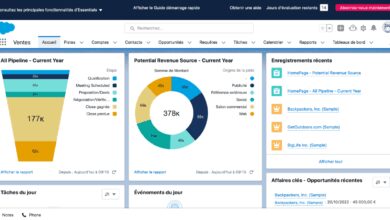
Salesforce Lightning offers a modern, intuitive interface. Use the Lightning App Builder to create role-specific dashboards and page layouts. For example:
- Sales reps see a simplified lead view with call-to-action buttons.
- Managers get real-time pipeline dashboards with forecasting widgets.
- Support agents access a unified console with case history and knowledge articles.
Custom apps can also be built using Salesforce DX or low-code tools like Flow. Avoid over-customization—stick to what’s necessary to support your core objectives.
How to Implement CRM Salesforce Based Systems Effectively: Step 5 – Integrate with Existing Systems
Salesforce doesn’t exist in a vacuum. To maximize value, it must connect seamlessly with your email, calendar, ERP, marketing automation, and e-commerce platforms.
Prioritize Key Integrations
Start with the most critical integrations:
- Email & Calendar (Gmail, Outlook): Sync emails, meetings, and tasks directly to Salesforce records.
- Marketing Automation (HubSpot, Marketo, Pardot): Sync lead activity and campaign data.
- ERP (SAP, NetSuite, Oracle): Share customer, order, and inventory data.
- Telephony (Zoom, RingCentral, Five9): Enable click-to-call and call logging.
- E-commerce (Shopify, Magento): Automate customer and order creation.
Use native connectors or middleware like MuleSoft (owned by Salesforce) for secure, scalable integration.
Ensure Data Synchronization and Security
Integration isn’t just about connectivity—it’s about consistency and compliance. Ensure:
How to implement CRM Salesforce based systems effectively – How to implement CRM Salesforce based systems effectively menjadi aspek penting yang dibahas di sini.
- Real-time or scheduled syncs prevent data drift.
- Field mappings are accurate across systems.
- API limits are monitored to avoid performance issues.
- Data encryption and role-based access controls are enforced.
For regulated industries (e.g., healthcare, finance), ensure integrations comply with HIPAA, GDPR, or SOC 2 standards. This step is crucial when you’re learning how to implement CRM Salesforce based systems effectively.
“Integration is not a one-time task—it’s an ongoing process of alignment and optimization.” — Integration Architect, Salesforce MVP
How to Implement CRM Salesforce Based Systems Effectively: Step 6 – Train Users and Drive Adoption
Even the most perfectly configured Salesforce instance fails if users don’t adopt it. According to Nucleus Research, lack of user adoption is responsible for 47% of CRM project failures.
Develop a Role-Based Training Program
One-size-fits-all training doesn’t work. Create tailored programs for different user groups:
- Sales Reps: Focus on lead management, opportunity tracking, and forecasting.
- Marketing Teams: Train on campaign setup, lead scoring, and ROI reporting.
- Service Agents: Cover case management, knowledge base usage, and SLA tracking.
- Managers: Teach dashboard interpretation, pipeline reviews, and team performance analytics.
Use Salesforce’s free Trailhead platform for interactive, gamified learning paths.
Implement Change Management Strategies
Resistance to change is natural. Combat it with:
- Clear communication about the ‘why’ behind the CRM rollout.
- Early wins: Showcase quick improvements (e.g., faster lead response times).
- Champions program: Identify super-users to mentor peers.
- Feedback loops: Regular surveys and Q&A sessions to address concerns.
Adoption isn’t a switch—it’s a journey. Monitor login rates, record creation, and feature usage via Salesforce Adoption Dashboards.
How to Implement CRM Salesforce Based Systems Effectively: Step 7 – Monitor, Optimize, and Scale
Implementation doesn’t end at go-live. The most successful organizations treat Salesforce as a living system that evolves with their business.
Establish Ongoing Monitoring and Reporting
Use Salesforce’s robust reporting engine to track:
- User adoption metrics (logins, record edits, feature usage)
- Process efficiency (e.g., time to close, case resolution time)
- ROI (e.g., increase in sales, reduction in support costs)
Set up automated dashboards for executives and team leads. Schedule monthly review meetings to assess performance and identify bottlenecks.
Iterate Based on Feedback and Business Changes
As your business grows, so should your CRM. Regularly:
- Collect user feedback through surveys and focus groups.
- Update workflows to reflect new sales processes or service policies.
- Add new features like Einstein AI for predictive lead scoring.
- Expand to new departments (e.g., HR, finance) using Salesforce Health Cloud or Financial Services Cloud.
Agility is key. The ability to adapt ensures long-term success in how to implement CRM Salesforce based systems effectively.
Leverage Salesforce Success Tools and Support
Salesforce offers a range of post-implementation resources:
- Success Cloud: Get personalized recommendations based on your usage.
- Customer Success Portal: Access best practices, webinars, and case studies.
- Trailhead Live: Free live training sessions from Salesforce experts.
- MyTrailhead: Custom learning portals for your organization.
These tools help you stay ahead of the curve and continuously improve your CRM maturity.
How to implement CRM Salesforce based systems effectively – How to implement CRM Salesforce based systems effectively menjadi aspek penting yang dibahas di sini.
What are the common pitfalls in Salesforce CRM implementation?
Common pitfalls include lack of executive sponsorship, poor data quality, inadequate user training, over-customization, and failure to align CRM goals with business strategy. Avoid these by following a structured implementation plan and involving stakeholders early.
How long does a typical Salesforce implementation take?
A typical Salesforce implementation takes 3 to 6 months, depending on complexity. Small businesses with basic needs may go live in 4–8 weeks, while large enterprises with multiple integrations and customizations can take 9–12 months.
Is Salesforce suitable for small businesses?
Yes, Salesforce offers scalable solutions like Salesforce Essentials and Sales Cloud Lightning, designed specifically for small businesses. These packages include simplified setup, pre-built templates, and affordable pricing, making it easier than ever to how to implement CRM Salesforce based systems effectively.
What is the role of a Salesforce Administrator?
A Salesforce Administrator manages user accounts, configures settings, maintains data integrity, creates reports and dashboards, and supports users. They are the backbone of ongoing CRM success and play a critical role in ensuring smooth operations post-implementation.
Can Salesforce be used for customer service and marketing?
Absolutely. Salesforce Service Cloud provides robust tools for case management, knowledge bases, and omnichannel support. Marketing Cloud enables email campaigns, customer journey mapping, and analytics. When integrated with Sales Cloud, they create a unified customer experience across all touchpoints.
Mastering how to implement CRM Salesforce based systems effectively isn’t about technology—it’s about strategy, people, and process. By defining clear goals, assembling the right team, cleaning your data, customizing thoughtfully, integrating wisely, training thoroughly, and continuously optimizing, you can unlock Salesforce’s full potential. The result? Higher sales, better service, and deeper customer relationships. Start smart, stay agile, and let Salesforce power your growth.
How to implement CRM Salesforce based systems effectively – How to implement CRM Salesforce based systems effectively menjadi aspek penting yang dibahas di sini.
Further Reading: